Individual
A self-facilitated program to boost your mental fitness for personal and professional growth
This website will offer limited functionality in this browser. We only support the recent versions of major browsers like Chrome, Firefox, Safari, and Edge.

Select the experience that fits your needs
A self-facilitated program to boost your mental fitness for personal and professional growth

A self-facilitated mental fitness program with exclusive pricing for 2 to 25 individuals

Explore coach-led mental fitness programs with workshops tailored to your organization
Leadership & Teams
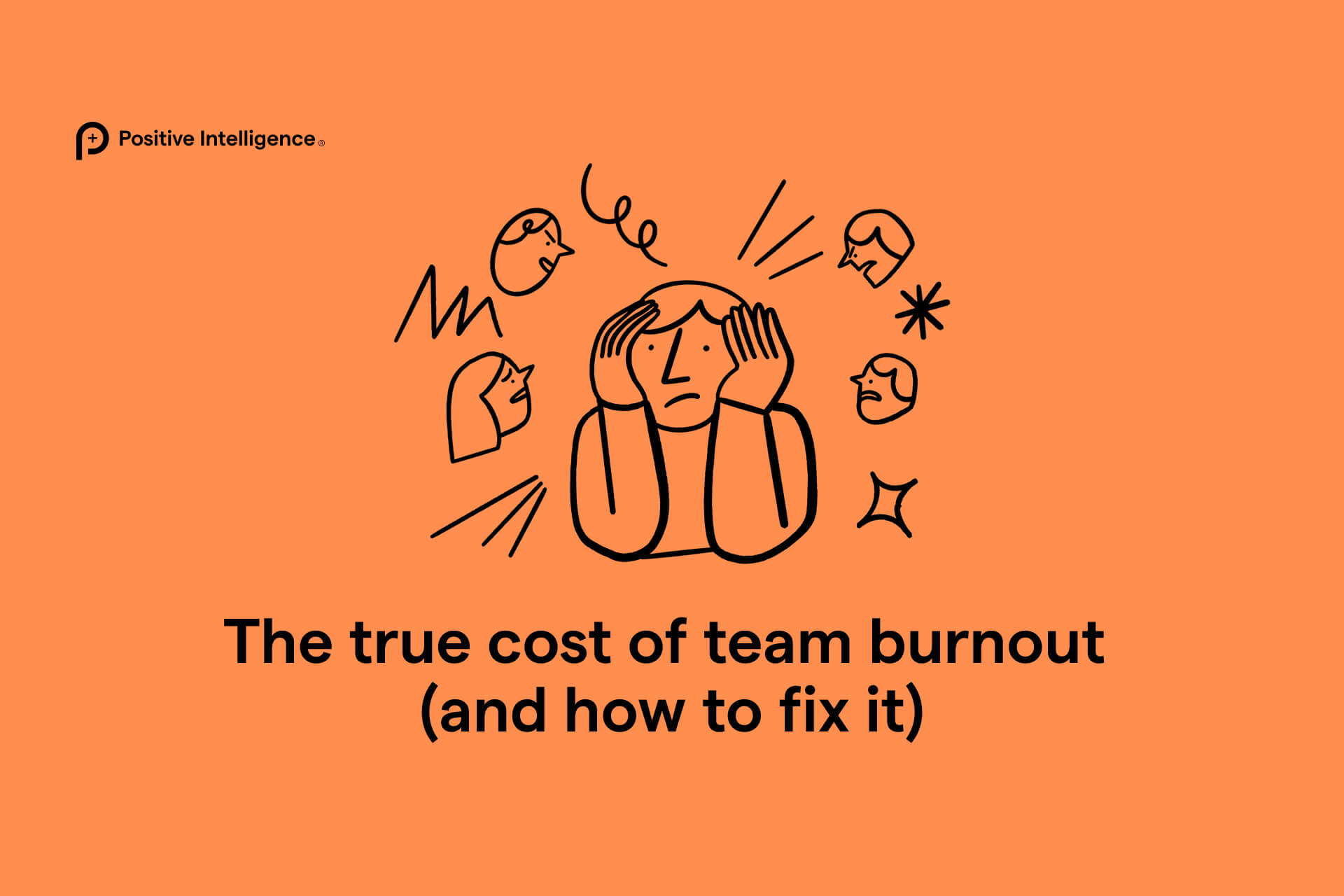
Your team is working hard and doing their best. But lately, it feels like they’re running in place. Everyone seems more tired, more on edge, and slower to bounce back from setbacks. If that sounds familiar, you may be looking at team burnout.
You might not even notice it at first because your team pushes through. But then you start to see it in more sick days, more people leaving, and more of your budget going toward hiring.
Gallup researchers found that employees who feel burned out “very often or always” are:
And when someone leaves, Gallup estimates you can spend one-half to two times their annual salary to replace them.
Some costs never show up in a report. A team member notices a problem but feels too drained to raise it. A simple decision drags on for three meetings. Your most creative people run out of energy to share new ideas.
Think of team burnout as flying into a headwind. Your team might reach its destination, but it burns more fuel and takes longer to get there.
Heavy workloads play a real part in team burnout. But two teams with the same workload can feel completely different.
Much of the strain on teams comes from Saboteurs: the automatic mental patterns we all have. Under pressure, they show up as stress, anxiety, restlessness, self-doubt, and frustration. Saboteurs live in the Survivor Brain, the part of the brain that reacts to threats before you can think clearly.
The universal Saboteur is the Judge. It finds fault with you, with others, and with your circumstances. When a team is under pressure for weeks or months, the Judge can point in all three directions at once:
None of this means your team is doing something wrong. Everyone has Saboteurs, leaders included, and they get louder under pressure.
Most of us don’t notice our Saboteurs, but they’re draining the energy we need to solve problems and perform at our best.
When everyone’s stuck on what went wrong, it’s hard for your team to find a way forward. So start by changing the question your team asks. Try this one:
“What do we need to do so that a year from now, we can say this challenge was the best thing that could have happened to us?”
Here’s how to bring it to your team:
This question opens the door to the Sage Perspective: the idea that you can turn any challenge into a gift and an opportunity. With the Sage Perspective, your team can acknowledge what’s not working, and then put their energy into what they can change.
Frank was the CEO of a publicly traded company when its stock lost two-thirds of its value in less than a year. His senior team was under enormous stress. They felt guilty, pointed fingers over what had gone wrong, and worked impossibly long hours without much progress.
Frank asked his team a version of this question, using three years as the time frame. They were skeptical at first. But he opened every weekly meeting with the same question, and little by little, the team shifted from anxiety and blame to curiosity, creativity, and determination.
In less than six months, they found a way to turn the crisis into an opportunity. Over the next year and a half, they streamlined the company’s product offerings, recommitted to its original value proposition, and watched the stock slowly recover its value.
The question gave Frank’s team a place to start. They made the turnaround last by building mental fitness: the ability to catch Saboteurs, shift into Sage, and respond to pressure with clarity.
Research in the book Positive Intelligence shows that workers with stronger mental fitness take fewer sick days and are less likely to burn out or quit.
Mental fitness also spreads. Teams pick up on each other’s moods, and they pick up on their leader’s most of all. When Saboteurs take over a team, everyone ends up flying into that headwind, burning extra energy just to hold things together. When a team works from Sage, it moves with a tailwind.
You don’t have to wait until things fall apart to get started. The PQ Program gives your team a structured way to build mental fitness through short daily practice. It works in three steps:
Among those who complete the 7-week program:
Mental fitness and mental health are related, but they’re different. Mental health is your overall psychological and emotional well-being. Mental fitness is the strength of mind that helps you handle everyday pressure with more clarity and less Saboteur noise.
Burnout and mental health challenges can overlap. If someone on your team is struggling, encourage them to use your organization’s mental health resources or talk with a professional. Mental fitness can support their well-being alongside that care.
Team burnout takes a toll on your people and on your results. But you can change the conversation. Bring the question to your next team meeting, and keep asking it. When the Sage Perspective becomes a habit, your team will start to:
This challenging season could end up being the best thing that happened to your team.
Ready to help your team build lasting positive habits? Learn how the PQ Program helps your team build mental fitness that holds up under pressure.