Individual
A self-facilitated program to boost your mental fitness for personal and professional growth
This website will offer limited functionality in this browser. We only support the recent versions of major browsers like Chrome, Firefox, Safari, and Edge.

Select the experience that fits your needs
A self-facilitated program to boost your mental fitness for personal and professional growth

A self-facilitated mental fitness program with exclusive pricing for 2 to 25 individuals

Explore coach-led mental fitness programs with workshops tailored to your organization
Leadership & Teams
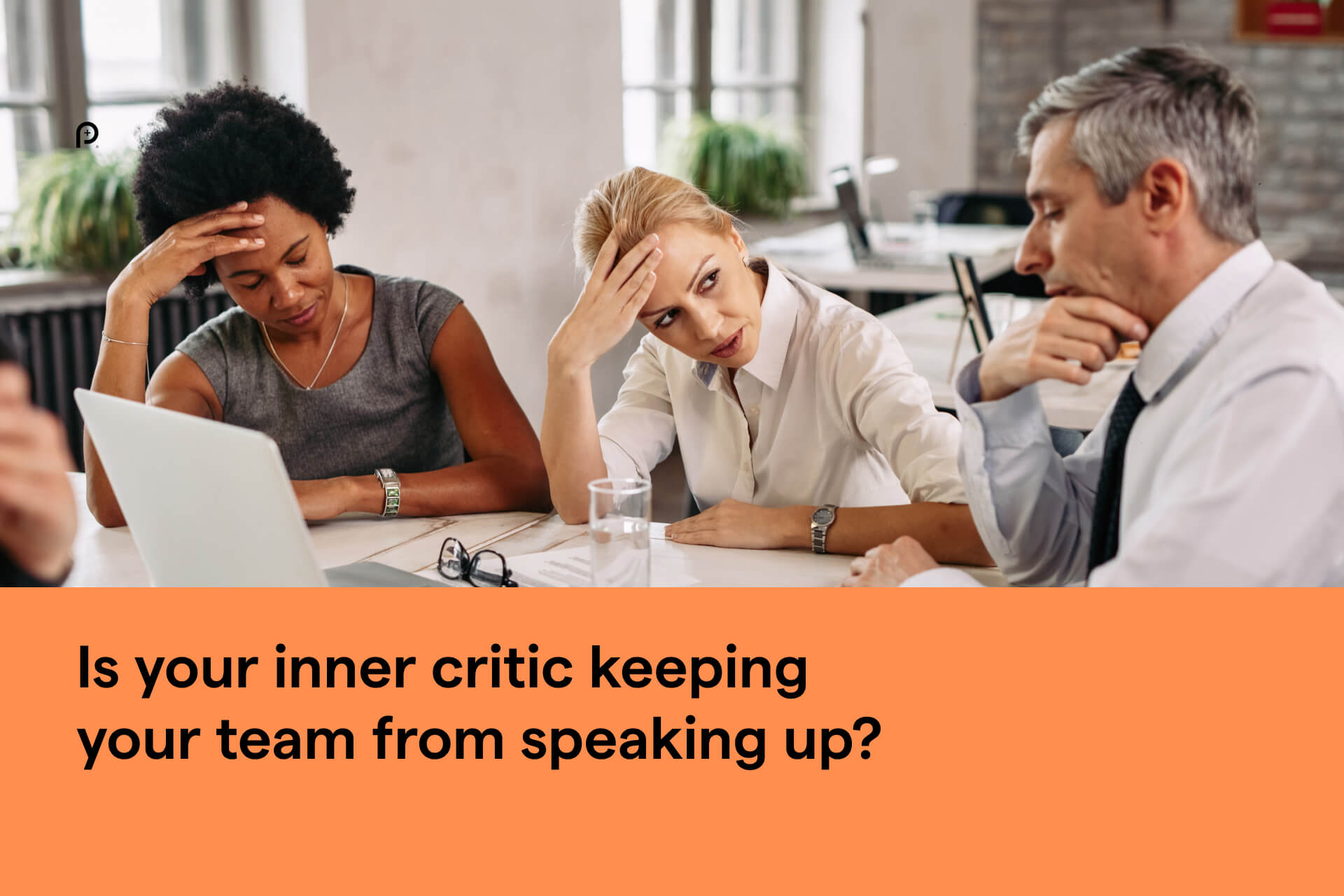
You have likely read the research on psychological safety. You may have even run team workshops or established policies that encourage open communication. And still, you lead meetings where the team nods through decisions, avoids difficult conversations, and keeps their best ideas to themselves.
If you’re like most leaders, you treat this as a team dynamic to fix. But you’re missing the most important factor: your own internal patterns. These shape psychological safety on your team more than any policy, workshop, or initiative could.
Teams take their cues from their leaders. When you dismiss a half-formed idea, go quiet after someone pushes back, or shift your tone even slightly in response to a question, your team registers it. And they adjust accordingly.
Your team scans the room for signals about what is safe to say, and they calibrate. If your signals feel mixed or mildly threatening, team members will default to the safer option, which is usually silence or agreement.
As a leader, the question of whether your team feels psychologically safe has less to do with them and more to do with you.
When a conversation feels risky, your brain responds in a default pattern. The Positive Intelligence framework calls this the Survivor Brain: the fight-or-flight system that evolved to protect you from genuine threats. It is fast, it is automatic, and it cannot always tell the difference between a difficult exchange and actual danger.
In that state, the Judge Saboteur takes charge. The Judge is the internal voice that evaluates constantly, scanning for what could go wrong. It runs as a habitual pattern in the background and sounds convincingly like your own voice, which is part of what makes it so hard to catch in real time.
The Judge points in three directions: at you, at others, and at the circumstances around you. Each one shapes the room differently.
When the Judge points at you, you replay what you said in the last meeting, second-guess a call you just made, or soften a stance you hold. Your team senses the hesitation and reads it as uncertainty about the direction. They start hedging, too.
When the Judge points at others, you react sharply to a half-formed idea or dismiss a suggestion before the person finishes sharing. Your team learns to only bring you polished thinking and skip the rough drafts, where the best ideas often live.
When the Judge points at circumstances, you vent about the timing, the budget, or the latest strategy shift. Your team learns to stop surfacing problems, because the response is frustration with conditions rather than engagement with what to do next.
All three patterns come from the Survivor Brain. And all three quietly teach your team that some thoughts are better kept to themselves.
The cost adds up slowly, which is why so many leaders miss it.
A team member doesn’t bring up the issue they noticed last week, because the last time someone raised something similar, you tensed up. A direct report nods along with a plan they have real concerns about, because the meeting is almost over, and you seem set on the direction. Your strongest innovator keeps a half-formed idea to themselves because they have learned that you respond better to polished work. None of this looks like a problem in the moment. The plan moves forward, and you feel productive.
Over time, though, you start to notice that you are the last one to hear about things. Your people seem a little less engaged than they used to be. Gallup reports that managers drive about 70% of the variance in team engagement. That number reflects the daily, accumulated effect of one person’s patterns on what a team is willing to share with each other.
Your Survivor Brain has a counterpart: the PQ Brain. It is the part of you that stays curious under pressure, reads situations clearly rather than defensively, and engages with what is actually happening rather than the charged version the Judge handed you.
Your Sage lives here. The Sage has five core capacities: to empathize with yourself and others, to explore with genuine curiosity, to innovate new approaches, to navigate toward what actually matters, and to activate clear forward motion without Saboteur interference.
When you lead from your Sage, your perspective shifts and your team feels it. You ask a question because you actually want to know the answer, not to make a point. Someone pushes back on your plan, and you hear it as information instead of a threat. Your team picks up on all of it and starts to do the same.
You can decide, going into a meeting, that you will listen more, stay open, and not react. That intention is worthwhile, and you have probably set it many times. But the Judge is a powerful force shaped by years of repetition, and you cannot out-discipline this neural pattern.
PQ Reps train the PQ Brain directly. Each rep is a short burst of focused sensory attention, about ten seconds, that pulls your mind out of Survivor mode and back into the present. You might focus on the physical sensation of rubbing your fingertips together, the sounds in the room around you, or the weight of your feet on the floor. The effect on the brain is measurable. You engage the regions associated with presence and perspective rather than threat and judgment.
When done consistently, this builds your capacity to catch the Judge before it shapes your next reaction, and to choose a Sage response instead. That is the rewiring that builds psychological safety on your team from the inside out.
Mental fitness and mental health are related, though they are different things. Mental health refers to your overall psychological and emotional well-being, including your ability to cope with stress, manage emotions, and maintain the relationships that matter to you. Mental fitness refers to the strength of mind that helps you handle the everyday ups and downs of leadership with more clarity and less Saboteur noise.
Think of it the way you would think of physical fitness. When you are fit, you can still get injured or sick. But your body may handle what comes with more ease. Mental fitness works the same way. It is a practice for building the positive mental habits that serve you, whether you are navigating a difficult quarter, a high-stakes conversation, or a moment when psychological safety on your team feels out of reach.
You shape psychological safety on your team more than anyone else. When you show up more willing to listen with curiosity rather than judgment, it changes what is possible for everyone else. That is the hidden connection: your ability to catch your Judge in the moment and choose a Sage response is what shapes psychological safety on your team.
Curious how often your Saboteurs are running the show in your leadership? Take the free 5-minute PQ Score Assessment to find out.