Individual
A self-facilitated program to boost your mental fitness for personal and professional growth
This website will offer limited functionality in this browser. We only support the recent versions of major browsers like Chrome, Firefox, Safari, and Edge.

Select the experience that fits your needs
A self-facilitated program to boost your mental fitness for personal and professional growth

A self-facilitated mental fitness program with exclusive pricing for 2 to 25 individuals

Explore coach-led mental fitness programs with workshops tailored to your organization
Leadership & Teams
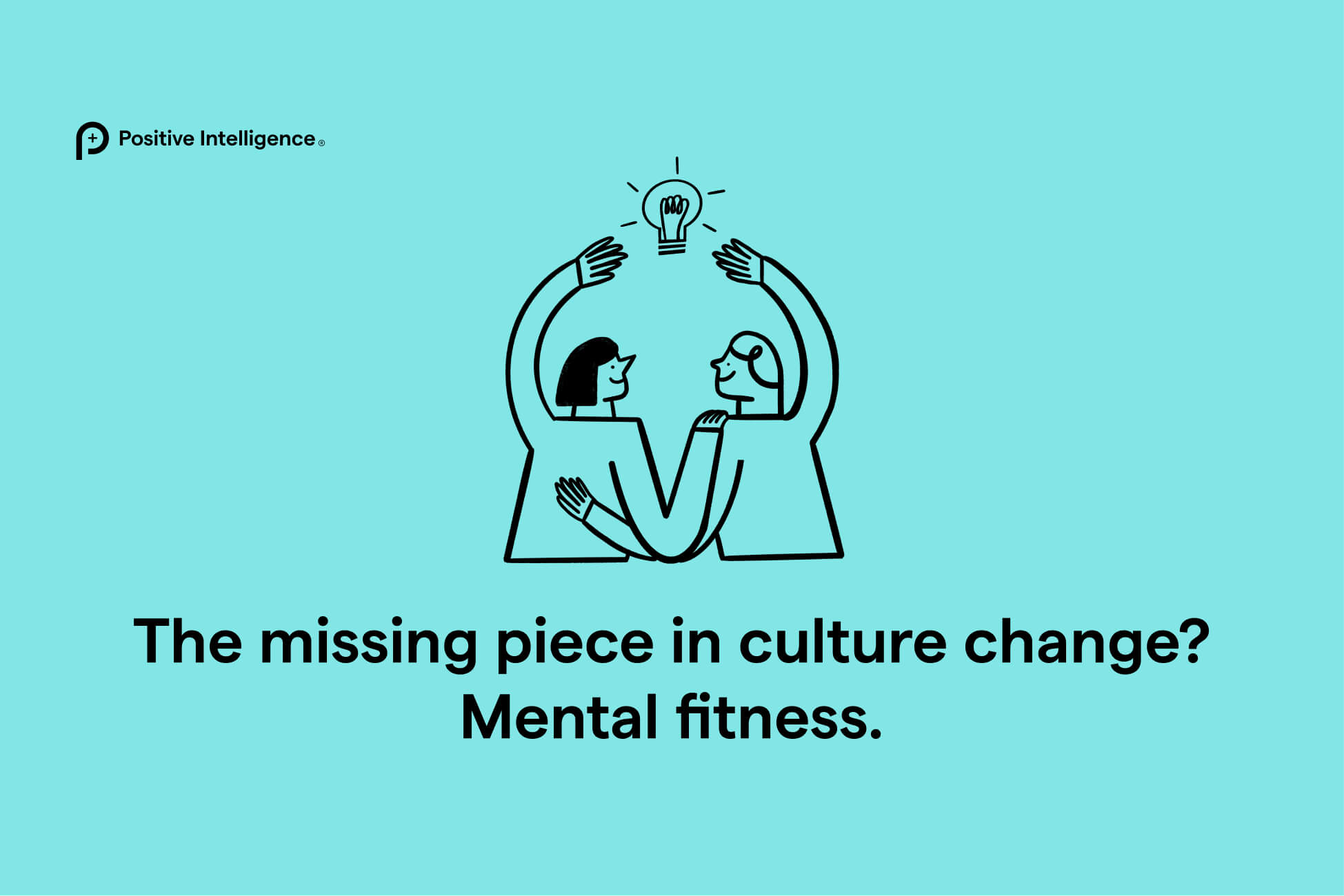
Every leader dreads the moment they realize their company has a toxic workplace culture. You watch your teams spend more time protecting their own turf than working together. People point fingers during meetings, and sometimes, your best employees hand you their resignation letters.
When you notice these defensive habits, you might turn to the usual corporate playbook. You write a new list of company values, change the mission statement, or launch a culture campaign.
Yet, a few months later, you find your team trapped in negative loops again.
Why do you and your team keep running into the same walls, even when everyone agrees that things need to change?
The truth is, you cannot fix a culture problem with initiatives or campaigns. A toxic workplace culture does not grow out of bad intentions or a lack of willpower among team members. It happens because your people are being sabotaged by their own mental defense mechanisms.
To change how your organization behaves, you must first understand why your team members are wired to resist culture change.
To understand why your team repeats these frustrating negative patterns, think of a child who breaks their leg. A doctor places a plaster cast on the leg to protect the bone. For months, that cast serves a vital, life-saving purpose. It keeps the leg safe from further injury so it can heal.
But what happens if the cast never comes off?
Over time, the same cast that was once protective becomes a rigid weight that restricts movement and growth.
You and your team are operating with deeply ingrained mental patterns that act as invisible casts. When you experience challenges, like working under pressure, surviving a layoff, or watching a colleague get punished for a mistake, your brain builds protective armor. As a result, you and your team stop sharing ideas, ignore problems, and may even become critical of one another.
As a leader, you might see these protective habits as a toxic workplace culture. In reality, your team is just wearing an old cast. These behaviors are not signs of weakness. They are old survival strategies that your team simply does not need anymore. When you recognize this, you can drop your frustration and lead with empathy. Your team isn’t toxic; they are simply stuck in a survival loop.
In the Positive Intelligence framework, we call these deeply ingrained patterns Saboteurs. Saboteurs are automatic, habitual, and live in the part of the mind that constantly looks out for danger and reacts instantly to protect you.
While every person on your team has a unique mix of Saboteurs, these patterns tend to blend across teams and departments. Over time, they create a shared company habit.
The master Saboteur that everyone has is the Judge. In an office setting, the Judge creates a highly critical environment. Your people constantly find fault with leadership, with other departments, and with themselves. This constant criticism creates the high anxiety and low trust that defines a toxic workplace culture.
When the Judge recruits other Accomplice Saboteurs, you start to see specific, destructive habits take shape:
This looks like a very successful team member on the surface, but underneath, they face complete exhaustion. They believe they are only valuable if they win all the time. This can lead to refusing to take time off, making short-term choices just to look good right now, and burnout in the long term.
This pattern creates extreme micromanagement and deep divides between teams. The Controller says you must control every single moving part to prevent a mistake. This constant control completely stops your team from moving fast, as it crushes new ideas.
The Pleaser Saboteur creates politeness on the surface with a toxic undercurrent of fake agreement. It prompts team members to say yes to workloads they cannot handle and to hold disagreements inside to prevent friction.
Most culture programs fail because they target the wrong part of the brain. A list of company values appeals to logic and the conscious mind.
However, when deadlines are looming and people are stressed, your team does not operate from logic. They default instantly to their Saboteur brain wiring.
When you try to lecture your team out of a Saboteur pattern, you are asking them to use willpower to override years of deep mental habits. It might work for a week or two. But as soon as the pressure mounts, your people return to their old ways.
To build a healthy, agile organization, you need to help your team activate a different part of the brain where your Sage lives. The Sage allows your people to view challenges with curiosity, empathy, and clear action instead of panic and self-protection.
Shifting away from a toxic workplace culture requires simple, daily mental fitness practices. These exercises weaken the Saboteurs and strengthen the Sage across your entire organization. You can guide your team through this change using three practical steps:
You cannot change a behavior you do not notice. Encourage your team to call out Saboteur patterns in real time without shaming each other. When a meeting slows down because people are being too perfectionistic, a team member can say, “I think the Stickler is stopping this project right now.” Naming the pattern separates the bad habit from the team’s identity, which gives everyone the space to make a better choice.
When a team stays stuck in survival mode, their brains physically cannot find creative answers. You can reset this state by introducing brief mental focus exercises, called PQ Reps, before meetings or during high-stress moments.
Spend just two minutes asking your team to focus entirely on a physical sensation, like the rise and fall of their breath or the feeling of their feet on the floor. This quiets the Saboteur brain and activates the Sage brain. This small reset completely changes the energy and output of the room.
As a leader, you set the tone for the entire organization. When problems arise, consciously turn away from judgment and use one or more of your Sage Powers:
You cannot force a healthy workplace culture. It is something you and your team must practice every day. By viewing your team’s resistance as Saboteur influence, you can replace blame with empathy. You stop fighting the symptoms of a toxic workplace culture and start treating the root cause in the brain.
Are you curious about the specific patterns holding back your organization? Have your team members take the free Saboteur Assessment to identify which shared habits are blocking your culture transformation.