Individual
A self-facilitated program to boost your mental fitness for personal and professional growth
This website will offer limited functionality in this browser. We only support the recent versions of major browsers like Chrome, Firefox, Safari, and Edge.

Select the experience that fits your needs
A self-facilitated program to boost your mental fitness for personal and professional growth

A self-facilitated mental fitness program with exclusive pricing for 2 to 25 individuals

Explore coach-led mental fitness programs with workshops tailored to your organization
Mental Fitness
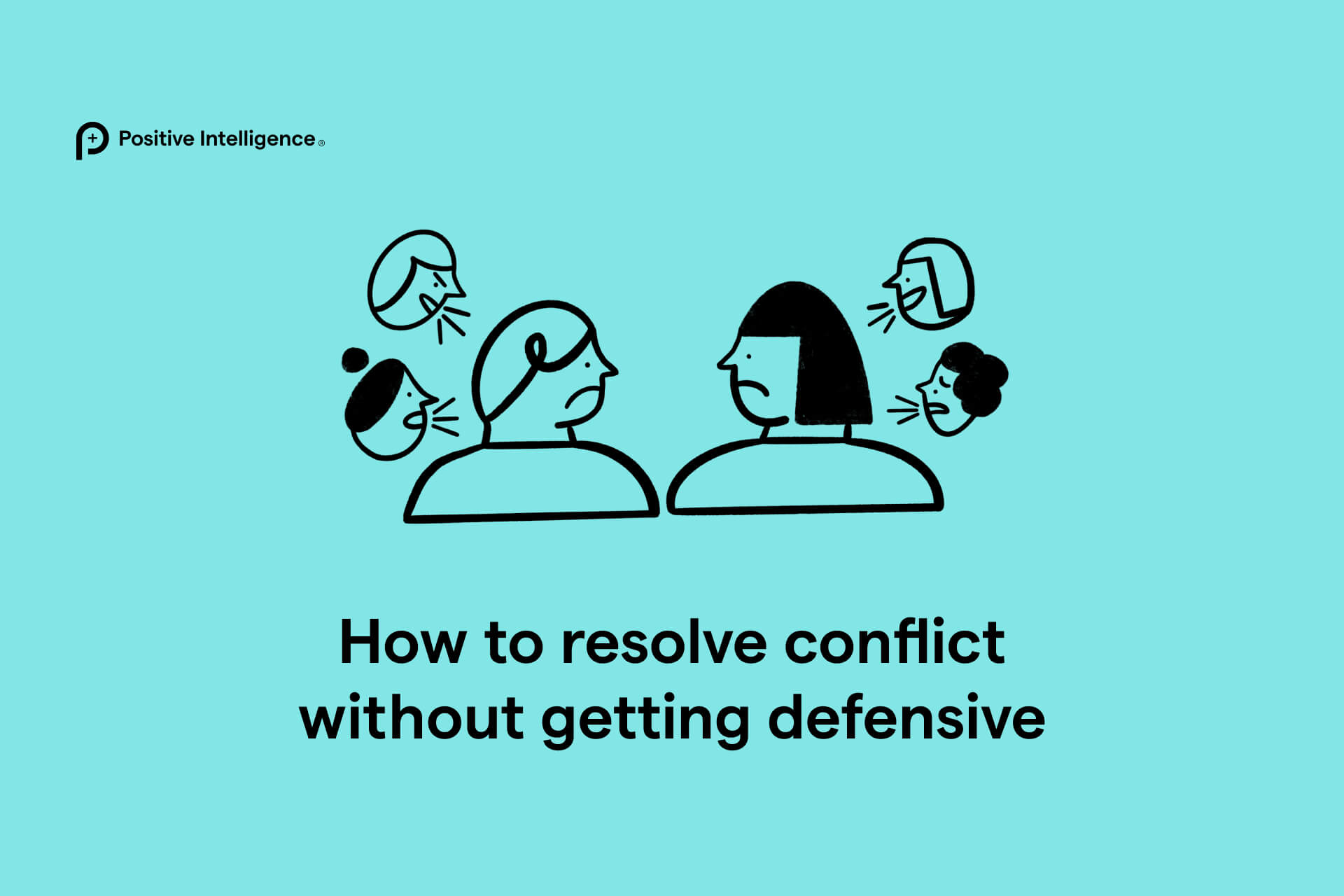
Understanding how to resolve conflict without shutting down or escalating is one of the most useful things you can develop. And it starts with knowing what your brain is actually doing.
Think about the last time a conversation went sideways. Maybe someone said something that felt like a dig, feedback landed harder than it was meant to, or a disagreement that started small became much bigger. At some point, you stopped really listening and started thinking about what you were going to say to defend yourself.
Positive Intelligence research describes two modes in which your brain operates. The first is the Survivor Brain, the part of you wired for self-protection. When it’s running the show, you narrow your thinking, put up your defenses, and start reading everything through the lens of threat. The second is the PQ Brain, the part of you that stays curious, calm, and capable of solving problems.
Most of us default to our Survivor Brain more than we realize. When a conflict shows up on top of our baseline stress, the Survivor Brain doesn’t pause to assess the situation. It just reacts. A sharp tone becomes a personal attack. A different opinion becomes a challenge to your judgment. A hard conversation becomes something you either fight your way through or shut down to avoid.
That’s when the Judge Saboteur takes over.
The Judge is the universal Saboteur that affects everyone. It’s the internal voice that evaluates and assigns blame, not just toward other people, but toward yourself. In a conflict, it’s the part of you that decides within seconds who’s right, who’s being unreasonable, and what the other person’s behavior says about them as a person.
The Judge developed as a form of self-protection, which is why it’s so fast and so convincing. But in the middle of a difficult conversation, it tends to make everything feel more personal and more high-stakes than it actually is. It’s hard to resolve conflict when part of you is busy building a case.
People sometimes worry that letting go of the Judge means losing their edge. They think that without it, they wouldn’t give tough feedback, catch problems early, or take action when something isn’t working. But that concern confuses judging with discerning, and they are genuinely different things.
Discerning is what happens when you calmly notice what isn’t working in order to figure out what to do next. If a colleague has missed a deadline several times in a row, the discerning response is to register that pattern clearly and think about what to do with that information. You might have a direct conversation with them, adjust your planning, or make a harder call if nothing else has worked. None of that requires anger, resentment, or blame to be effective.
The sign that the Judge has taken over is the feeling itself. When you’re discerning, you’re calm and oriented toward what comes next. When you’re judging, you’re feeling upset, disappointed, or resentful, and that distress isn’t caused by what happened. The Judge’s reaction to it causes it. The situation is the same either way. What changes is whether your Sage (your wise, positive self) or your Judge is doing the interpreting.
Say your manager sends a sharp message about a project you’ve been putting real effort into. Your immediate reaction might be a knot in your stomach and an urge to defend yourself or go quiet. That tightness and spike of resentment are signals that the Judge has taken over.
The shift starts with catching that feeling before you act on it. Take a few deep breaths, turn your attention to the tension in your body, and deliberately pause before you decide what this message means. Use your feelings as a signal that the Judge is running the show right now. Then you can choose not to let it steer the conversation.
From there, your Sage can actually engage with what was said. Ask a clarifying question instead of defending your position. Stay curious about what your manager actually needs instead of building a case for why you were right. Address the real problem instead of the charged version of it that the Judge handed you.
The goal here isn’t to become someone who never gets frustrated or never says something they wish they hadn’t. Conflict is a normal part of any relationship worth having. What wears down trust over time isn’t the friction itself, but rather its pattern. This can include reactive loops, defensive scripts, and conversations that end without resolution.
When you build the mental fitness to catch the Judge before it takes control, those patterns start to shift. Even if nothing about the other person changes during the conflict, you show up differently. And that changes what’s possible for conversations, relationships, and your own performance and well-being.
If you want to resolve conflict without getting defensive, you need to build mental fitness. It starts with small amounts of daily practice and builds quickly with consistency. To get started, take the free 5-minute PQ Score Assessment to measure your mental fitness and find out where to focus your practice first.