Individual
A self-facilitated program to boost your mental fitness for personal and professional growth
This website will offer limited functionality in this browser. We only support the recent versions of major browsers like Chrome, Firefox, Safari, and Edge.

Select the experience that fits your needs
A self-facilitated program to boost your mental fitness for personal and professional growth

A self-facilitated mental fitness program with exclusive pricing for 2 to 25 individuals

Explore coach-led mental fitness programs with workshops tailored to your organization
Mental Fitness
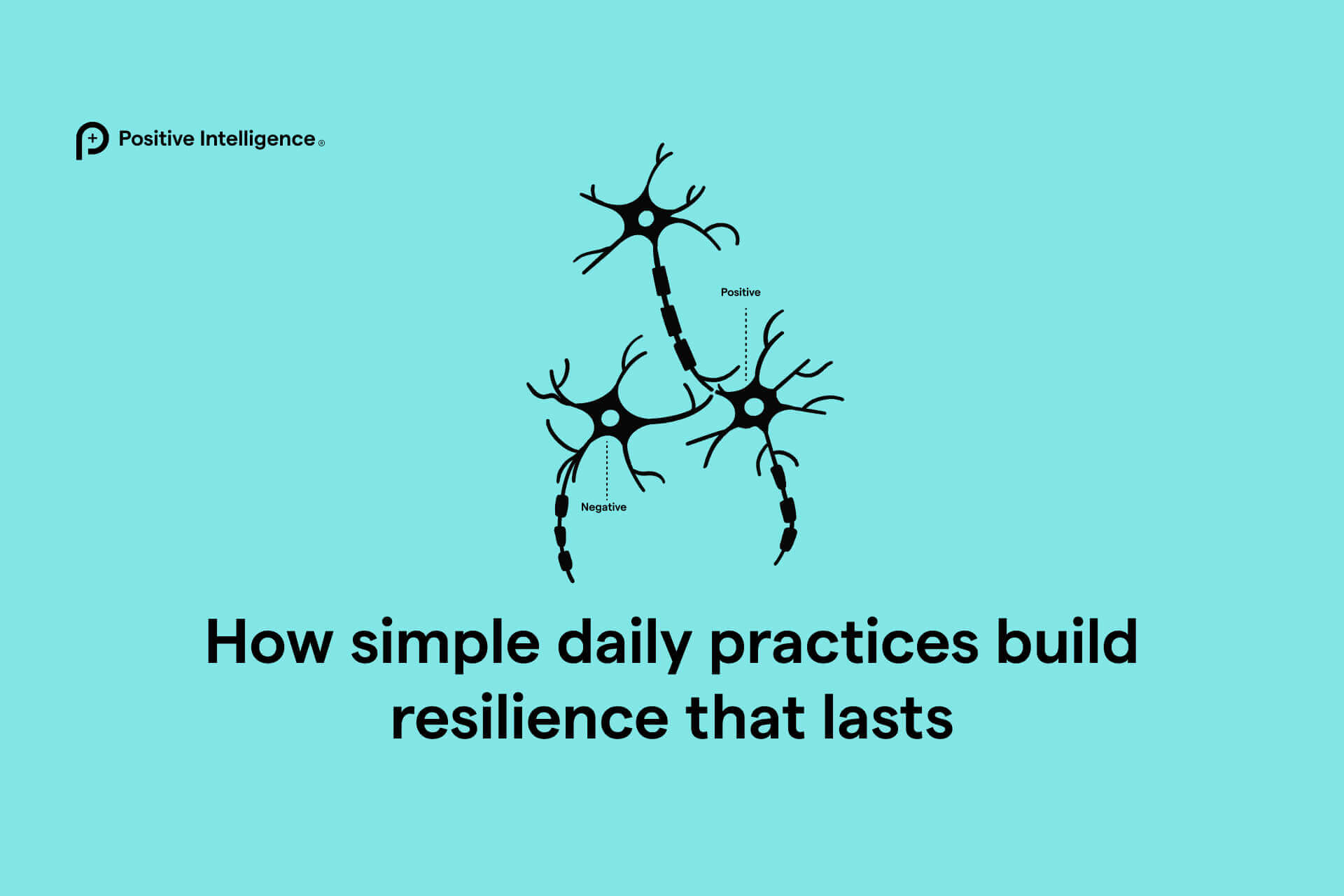
Your resilience isn’t fixed. If you tend to get stuck when facing a setback, you can build resilience by training your brain to recover faster.
Just like you’d develop physical strength at the gym, you can strengthen your ability to bounce back from challenges. When you build resilience, you’re not becoming tougher or developing iron discipline. You’re simply teaching your brain new patterns of response.
Many people believe resilient individuals have mastered some secret willpower technique. But brain science tells a different story. They’ve simply trained their brains to recover faster.
The key to building resilience is understanding how your brain handles pressure. You need to learn how to shift from the parts of your mind that create stress to the parts that actually solve problems.
Every time something challenging happens, your brain makes a choice. It activates one of two distinct modes: Survive or Thrive.
Your Survivor Brain includes the brain stem and limbic system. These are the most ancient parts of your mind, and their primary job is to keep you safe. When you feel threatened, this area triggers your fight-or-flight response.
This system serves you well when you’re facing actual physical danger. But here’s what happens in modern life: your brain often treats a challenging email or a difficult conversation the same way it would treat a genuine threat.
When your Survivor Brain takes over, it narrows your focus to what feels threatening. It floods your body with cortisol (the stress hormone). It encourages you to see everything through a lens of anxiety and fear.
In this state, you can’t build resilience. You’re focused entirely on getting through the moment.
Your PQ Brain includes the middle prefrontal cortex and the “empathy circuitry.” This is what fuels high performance and enables you to thrive. When this part of your brain is active, you stay centered even when things go wrong.
Your PQ Brain lets you view a setback as a potential gift or opportunity. You access your curiosity, clear-headed action, and creativity. True resilience is the ability to move your mental energy from the Survivor Brain back to the PQ Brain as quickly as possible.
If you want to build resilience, you first need to identify the internal noise holding you back. These are your Saboteurs. They’re automatic mental habits that live in your Survivor Brain. They lead you to believe they’re protecting you, but they’re actually limiting your energy and blocking your ability to bounce back.
Here are a few of the patterns that might keep you from recovering:
The Judge is the universal Saboteur that affects everyone. It’s the voice telling you that you failed because you aren’t good enough. It finds fault with you, others, and your circumstances. When the Judge is active, building resilience becomes difficult because you’re focused on blame rather than growth.
The Hyper-Vigilant keeps you in constant anxiety about what might go wrong next. You spend so much energy worrying about the future that you can’t handle the present challenge. It makes the world feel uncertain, which impacts your mental strength.
The Victim convinces you that you’re uniquely unlucky. It focuses on your pain and makes you feel powerless. To build resilience, you need to shift from “Why is this happening to me?” to “How can I use this?” The Victim blocks that shift.
The Controller feels most comfortable when things are predictable. When life gets uncertain, the Controller becomes rigid and anxious. It tries to force a solution, which often creates more tension and stress.
The Avoider encourages you to sidestep unpleasant tasks or feelings. It offers temporary relief but allows problems to accumulate. Building resilience requires staying present with the difficulty of a challenge, which the Avoider resists.
These patterns aren’t who you are. They’re simply old neural pathways formed in childhood to help you cope. To grow, you need to learn how to quiet these voices and listen to a different part of your mind.
How do you know if you’re making progress with these patterns? You can measure your PQ Score.
Your PQ Score (Positive Intelligence Quotient) measures the percentage of time your mind acts as your friend rather than your enemy. If your mind is serving you 50% of the time, your score is 50.
Research shows that the “tipping point” for resilience is a PQ Score of 75. When you reach this level, you’re no longer constantly pulled back by your Saboteurs.
People who reach this 75 threshold:
When your score is below 75, life can feel challenging. You might have great talent and knowledge, but your Saboteurs keep limiting your progress.
Here’s the encouraging news: you can rewire your brain. Just like you develop physical muscle at the gym, you can develop the strength of your PQ Brain. The process involves three key steps.
You can’t change a habit if you don’t notice it. The moment you feel stress, anxiety, or frustration, pause. Recognize that this is a Saboteur.
Label it. Say to yourself, “That’s my Judge,” or “there’s my Avoider again.” This simple act of labeling shifts the energy away from the Survivor Brain.
Once you’ve caught your Saboteurs, you need to shift your brain activation. You do this through something called a PQ Rep.
A PQ Rep is a 10-second exercise where you focus your full attention on a physical sensation. You might:
When you do this, you quiet your Saboteurs and activate your Sage, the part of your mind that handles challenges with wisdom and clear action. A PQ Rep is like a gentle reset button for your nervous system.
Now that you’re centered, you can use your Sage Powers to build resilience:
The ultimate practice of resilience is being able to find the gift or opportunity in any setback. It’s a technique used by the most resilient people in the world.
When something difficult happens, the Sage tells you that the situation can be turned into a gift or opportunity. This isn’t about ignoring real pain or pretending everything is fine. It’s a practical strategy. You actively decide to find the value in the setback.
Maybe the gift is a new piece of knowledge. Perhaps it’s the chance to develop a new mental muscle. It could be a better path you wouldn’t have seen otherwise. When you commit to finding the gift, you stop feeling like a victim of your circumstances and start becoming the architect of your future.
Building resilience is a journey, not a sprint. It takes about 21 days of consistent practice to notice a shift in your neural pathways. It takes about seven weeks to make those changes stick.
Start small:
These small moments add up. Over time, you’ll find that the setbacks that used to disrupt your day barely slow you down anymore. Your internal noise will quiet, and your ability to bounce back will become natural.
Ready to start? The first step to help you build resilience is to know where you stand. Take the 5-minute PQ Score Assessment to see your current mental fitness level. Once you have your baseline, you can begin the practice that transforms stress into strength.