Individual
A self-facilitated program to boost your mental fitness for personal and professional growth
This website will offer limited functionality in this browser. We only support the recent versions of major browsers like Chrome, Firefox, Safari, and Edge.

Select the experience that fits your needs
A self-facilitated program to boost your mental fitness for personal and professional growth

A self-facilitated mental fitness program with exclusive pricing for 2 to 25 individuals

Explore coach-led mental fitness programs with workshops tailored to your organization
Leadership & Teams
You’ve invested in top talent. You’ve acquired the best tools, the latest technology, expert consultants, and leadership training. You’ve followed the playbook to the letter.
So why does it still feel like your team is running through waist-deep water?
Collaboration takes more effort than it should. Good ideas stall out somewhere between conception and execution. Change initiatives don’t land the way you hoped. Your team’s performance isn’t matching its potential.
The problem isn’t your people. It’s not your strategy. It’s not your tools.
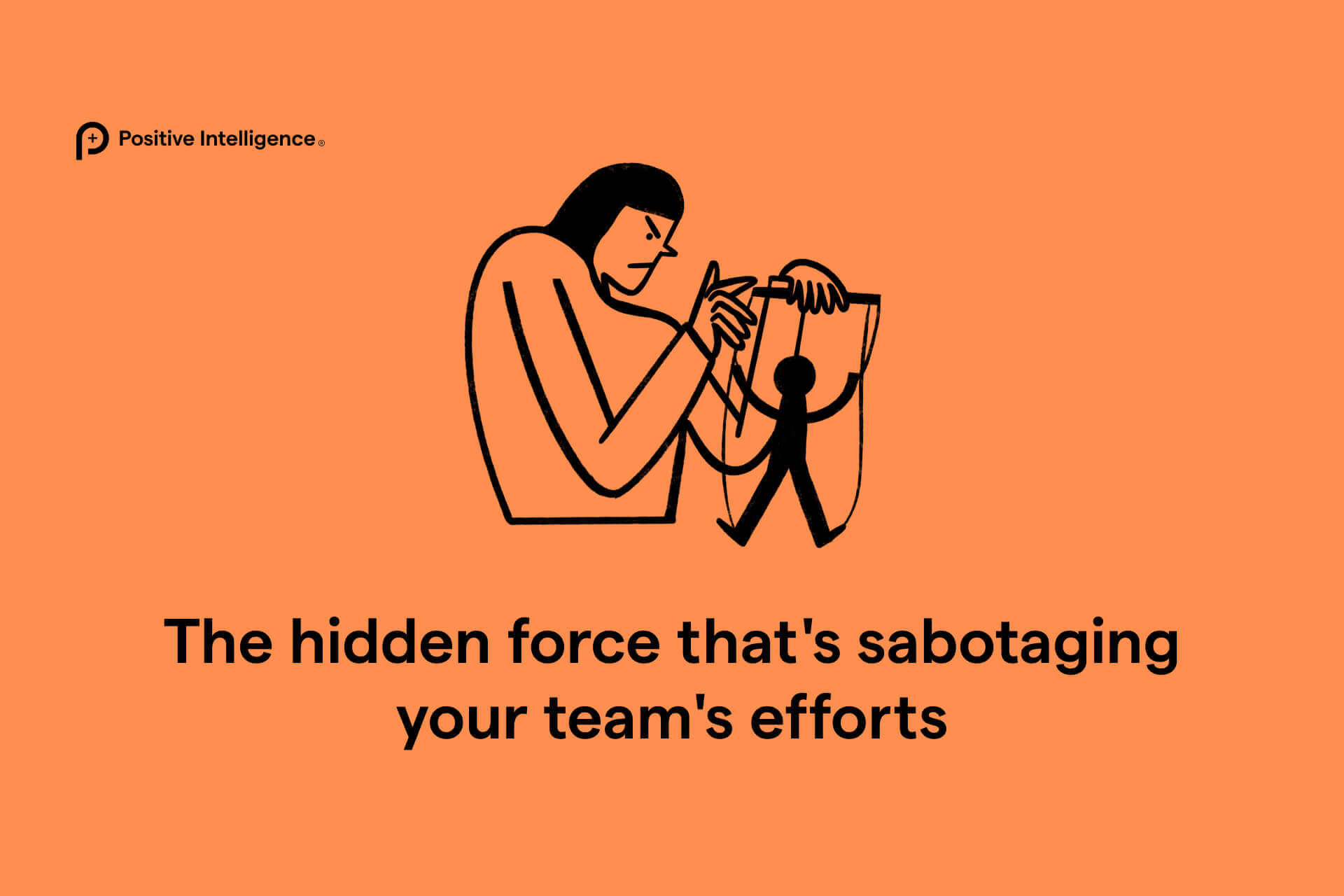
The real problem is self-sabotage. Internal mental patterns like stress, fear, and self-doubt are blocking your team’s capabilities from translating into results.
The answer lies in strengthening mental fitness across your team.
Imagine your team is on a beach competing to build sandcastles. Every 30 minutes, a wave comes in and destroys half of what they’ve built.
You have two choices to improve team performance:
1. Send them to an advanced sandcastle-building workshop to help them work faster.
2. Invest time building a protective wall that stops the waves from destroying their work.
You know the answer is the second option. Yet when it comes to your team’s performance, you consistently choose the first option. You add more training programs. You add more frameworks. You add more processes. But you don’t address the patterns that wash away your team’s progress every single day.
Mental fitness is the wall that protects the investments you’ve already made in talent. It’s what stops the internal patterns of stress, fear, and self-doubt from destroying your team’s progress.
Like the waves destroying your sandcastles, Saboteurs don’t announce themselves. Instead, they show up in your team as:
These are symptoms of mental patterns called Saboteurs. Saboteurs are the automatic negative thought patterns that hijack your team members under pressure. They destroy half of your team’s potential every single day, ensuring you never get the ROI you expected from your talent investment.
Here’s what this looks like in practice. Consider what happens when you try to implement change with a team:
You announce a new strategic initiative. The team may nod in agreement during the kickoff meeting, but eventually, they begin to show resistance. You might notice passive-aggressive comments in Slack or team members missing deadlines. They might spend every meeting raising concerns, and soon, the momentum for the initiative dies.
These are all signs that your team members’ Saboteurs are running the show. Their Judge Saboteur tells them this change proves they weren’t good enough before. Their Avoider Saboteur convinces them to wait it out. Their Controller Saboteur resists anything that threatens their sense of order.
The team believes these reactive thoughts are rational concerns. And the change initiative fails.
This is a mental fitness problem. When faced with uncertainty, team members’ brains default to survival reactions. They operate from stress and fear instead of clarity and adaptability. When your brain is hijacked in survival mode, you can’t think your way into better performance.
So what’s the alternative? It starts with understanding how mental fitness multiplies the potential your team already has.
Here’s a principle that changes everything about how you approach team development:
Achievement = Potential × PQ
Your team’s potential is everything they already bring to the table. This includes their intelligence, skills, experience, education, and natural talents. You probably spend most of your budget focused on this side of the equation. You recruit top performers, invest in professional development, and regularly upgrade your technology stack.
But there’s a second variable that multiplies or divides your results. It’s your PQ Score, or Positive Intelligence Quotient.
Your PQ Score measures how often your mind operates from clarity, calm, and focus. It also measures how often you get hijacked by internal critics, worry, and self-doubt. Research shows that teams with a PQ Score above 75 perform 31% better on average when other factors are equal.
Here’s the truth that most leaders miss: only 20% of people score above this critical tipping point. That means 80% of your team members are likely sabotaging their own potential every single day, no matter how talented they are.
Research on Positive Intelligence reveals a critical threshold for individuals. When you operate with positivity at least 75% of the time, performance improves across every metric that matters.
Among those who reach this tipping point:
Below this threshold, people struggle to achieve their potential, even with exceptional talent and resources. Saboteurs keep washing away their efforts, preventing teams from becoming truly high-performing.
Before you add another training program, another consultant, or another culture initiative to your budget, ask yourself this: What percentage of your team’s capability is being destroyed by stress, internal politics, and resistance to change?
The fastest way to build a high-performing team isn’t to hire more talent or add more tools. It’s to help each team member raise their PQ Score and stop the waves from washing away your investment in their potential.
To get started, have your team take the free 5-minute PQ Score Assessment to discover their current mental fitness level.
Once you know where you stand, you can take action. The PQ Program raises individual PQ Scores in just seven weeks using simple daily exercises that rewire how the brain responds to challenges. This builds the mental fitness foundation that makes every other skill, tool, and strategy actually work.
Your team’s potential is already there. Their intelligence, their skills, and their experience are all waiting to be multiplied by a higher PQ Score.