Individual
A self-facilitated program to boost your mental fitness for personal and professional growth
This website will offer limited functionality in this browser. We only support the recent versions of major browsers like Chrome, Firefox, Safari, and Edge.

Select the experience that fits your needs
A self-facilitated program to boost your mental fitness for personal and professional growth

A self-facilitated mental fitness program with exclusive pricing for 2 to 25 individuals

Explore coach-led mental fitness programs with workshops tailored to your organization
Mental Fitness
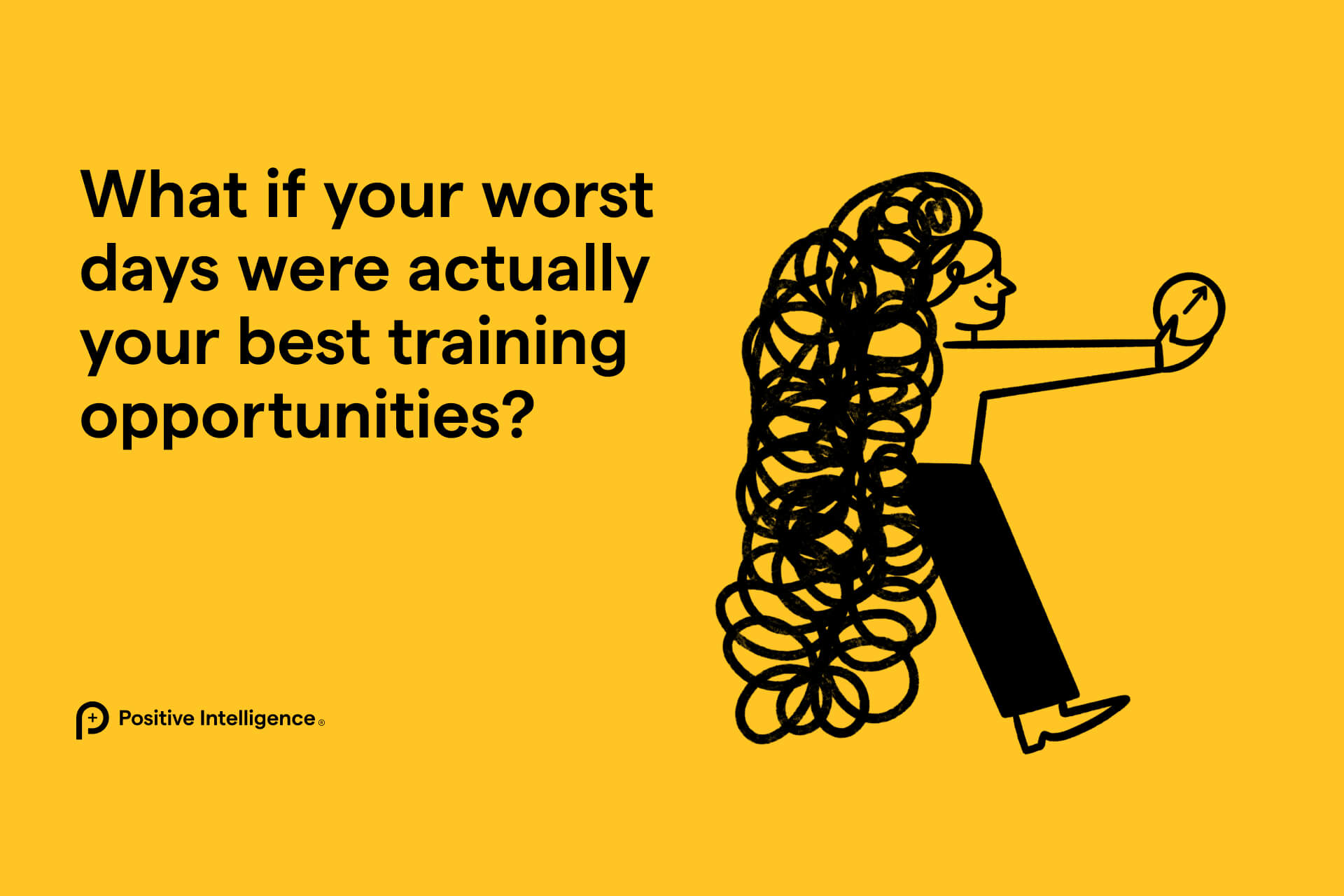
Self-sabotage is hard to spot while it’s happening because it looks like a reasonable thought: “I should redo this,” or “I don’t have time to rest right now.”
This is because self-sabotage starts in the Survivor Brain. When a challenge arises, like a hard conversation or a mistake at work, your brain falls back on the same patterns. That reaction comes from the Survivor Brain: the fight-or-flight system built to protect you from real danger. It’s fast, it’s automatic, and it can’t always tell a stressful situation apart from an actual threat.
That’s when Saboteurs take over. They’re the automatic patterns you picked up early in life to feel safe. Now they get in the way of your growth. Everyone has Saboteurs, and they tend to show up in familiar, specific ways. Here are just a few:
The Judge is the master Saboteur and the one that affects everyone. It’s the voice that tears you apart over a small mistake and keeps you replaying it for hours after the fact.
The Hyper-Achiever ties your self-worth to constant performance. You hit a goal and feel flat within a day, already chasing the next one.
The Stickler demands perfection in all things. You rewrite the same email five times because it isn’t quite right yet.
The more pressure you’re under, the louder these patterns get. Each one wastes your energy and pulls you further from the goals you’re trying to achieve.
Your Saboteurs have a counterpart: your Sage. This part of your brain fuels real growth. When it’s active, you stay steady even when things go wrong. You can see a setback as useful information instead of proof you’ve failed. You have access to curiosity, clear thinking, and creativity.
Check how you feel to know which part of your brain is in charge. Calm and curious means your Sage is leading. Anxious, self-critical, or resentful means a Saboteur has taken over.
When you feel hijacked, naming the Saboteur helps. It’s hard to argue with “I’m terrible at this.” It’s a lot easier to argue with “there’s my Judge, telling me I’m terrible at this.” Naming it creates a gap between the thought and your reaction, and that gap is where the shift from Saboteur to Sage happens.
Here’s the part most self-improvement advice skips: catching self-sabotage in the moment, rather than getting swept along by it, is the actual path to change. Not eliminating the thought. Catching it.
Your Judge, your Hyper-Achiever, or your Stickler will never fully go away, even years into this practice, but they do get quieter. The goal isn’t to create a version of you with no Saboteurs. It’s to develop your ability to catch them faster and respond differently, which over time changes your relationship with them.
Every time you catch a Saboteur, it’s a chance to do a PQ Rep: ten seconds of full attention on a physical sensation, which shifts your brain out of Saboteur mode. A few examples:
None of this erases your Saboteurs. But it does take the oxygen away from them, one short rep at a time.
You don’t need extra hours in the day for this practice. You can attach your PQ Reps practice to the routines you already have. Here’s how to set that up:
Self-sabotage doesn’t stay contained. It creates a Saboteur contagion effect. When you show up in Saboteur mode, it tends to draw out Saboteur reactions in the people around you. But the reverse is also true: when you approach a moment with a Sage mindset, it tends to bring others into that state with you.
Mental fitness and mental health are related, but different concepts. Mental fitness helps you handle the everyday ups and downs of life with less Saboteur noise. It isn’t a replacement for mental health support, which may require time off and access to professional care.
Your Saboteurs will keep showing up. After all, they are just your natural strengths taken too far. But what can change is how quickly you notice them, how you respond, and how much power you give them.
Every day, challenges will surface your Saboteurs, and pressure will make them seem louder. Each time this happens, you have a cue to do a PQ Rep.
Ready to build your practice? The PQ Program gives you guided PQ Reps, a language for naming what’s happening in your own mind, and a practice that rewires your brain for greater happiness and success.